The Clarke Knives Approach
My approach to knife making brings together several strands of my working life.
As a graduate Metallurgist, more than 55 years in engineering and metallurgy have given me a detailed understanding of materials, processes and the importance of getting the fundamentals right.
Experience matters
Living in South Africa introduced me to a different knife-making tradition and gave me the opportunity to learn from an active community of some of the world’s most significant knife makers.
Today, I combine those experiences with my metallurgical and engineering background in my Wiltshire workshop.
I make my own Damascus. I select steels according to their intended purpose.
I pay close attention to heat treatment and blade geometry.
And I make each knife individually.
The result is not simply a handmade knife. It is a knife designed, engineered and crafted specifically for its purpose.
Below are FAQ about knifemaking that I am most often asked.
Where are your knives made?
I am based in Wiltshire, UK, where I individually design and handcraft my knives. You can visit my workshop by appointment.
How long have you been making knives?
I have been involved in engineering and metallurgy for more than 55 years. My knife-making skills developed some 20 years ago during my years living in South Africa, where I learned from and worked alongside members of the country’s knife-making community.
I have brought that knowledge and experience back to the UK and continue to develop my own approach to knife making.
What does “Bespoke” mean?
A bespoke knife is made specifically for you and its intended purpose.
Rather than choosing from a fixed production range, I like to discuss the blade profile, dimensions, steel, geometry, handle, balance, finish and other details with you to create a knife suited to the way you intend to use it.
A professional chef may have very different requirements from a collector or a bushcraft enthusiast. The design should refelect that.
Do you make every knife yourself?
Yes, I personally make each knife, from preparing and shaping the blade through grinding, finishing, fitting the handle and sharpening. My background in metallurgy and engineering has a significant influence on the way I approach knife making. I am particularly interested in the relationship between material selection, heat treatment, geometry and practical performance.
What makes your knives different from factory-made knives?
A production knife is generally designed to meet the needs of a broad market. A bespoke knife starts with an individual customer and their intended application.
There is also something rather special about owning a knife that is not generally seen elsewhere.
What are the best steels for knives?
There is no single “best” steel for every knife.
The appropriate steel depends upon what the knife is intended to do. A professional kitchen knife, a hunting knife and a hard-working bushcraft knife can have quite different requirements.
For culinary knives I commonly use AEB-L Stainless steel, while 1095 and 15N20 are among the steels I use when making Damascus.
The choice is based on the performance requirements rather than simply selecting the most expensive or fashionable steel. I do recomment these though, if I feel the application warrents it.
What is the difference between stainless steel and carbon steel?
The short answer is that carbon steels will develop a patina in time (and go rusty if not properly cared for) and stainless will not. There are, however, other factors to bear in mind.
The microstructure of the two steels are very different. Stainless will retain an edge for longer but then takes a little more effort to re-sharpen it. Damascus patterns made in carbon steel are very vibrant whereas stainless damascus is subtle and somewhat understated.
Why does metallurgy matter when making a knife?
Steel is not simply a material from which a blade is shaped. Its performance depends heavily upon its composition, processing and heat treatment.
Steel composition, heat treatment, hardness, toughness, blade geometry, edge geometry and the intended use all interact.
The aim is not simply to select an impressive-sounding steel, but to understand what its properties mean in the finished knife and how those properties can best be developed through appropriate heat treatment and geometry.
My background in metallurgy and engineering gives me a strong understanding of those relationships and allows me to approach each knife as both a crafted object and an engineered cutting tool.
Is harder steel always better?
No. Hardness is only one consideration.
Increasing hardness can improve wear resistance and edge retention, but toughness, edge stability, corrosion resistance and ease of sharpening also need to be considered.
The objective is to achieve an appropriate balance of properties for the particular knife and its intended use.
A knife that is perfect for delicate culinary work is unlikely to be the right choice for demanding outdoor use.
Why is heat treatment important?
Heat treatment is fundamental to the performance of a blade and is one of the most critical stages in making a high-performance blade.
The correct heat treatment allows the steel’s properties to be developed to suit the intended application. Poorly treated steel cannot be rescued simply by producing a beautiful grind or handle.
The steel’s properties can be dramatically affected by how it is heated, quenched and tempered. Done correctly, heat treatment allows the steel to achieve the combination of properties required for the application.
Two blades made from the same steel can perform very differently if their heat treatment and geometry differ.
This is one of the areas where my metallurgical experience is particularly relevant to knife making.
Do you make your own damascus?
Yes. I make my own carbon steel Damascus rather than simply purchasing commercially produced Damascus and grinding it into a blade. This allows me to control the materials, construction and pattern and to create blades that are genuinely individual.
I have made stainless damascus in the past but it is incredibly time and resource demanding. For small scale production it is just not cost effective to make. However, if a customer requires stainless steel damascus I can source ready made products. Fortuntely, there are a couple of very high quality European producers (German & Swedish) which I am happy to use.
For my carbon steel Damascus I work with 1095 and 15N20 and produce a range of patterns, including ladder, raindrop and twist Damascus.
I also make San Mai, Cu Mai and Ni Mai.
How Do You Choose the Steels used in your Damascus?
There are a few well-established combinations of carbon steels, namely 1080, 1095, 15N20 and CS80. I would normally choose 1095 and 15N20 because they give the best pattern contrast in the finished material.
What is Damascus steel?
Damascus is a layered steel construction produced by combining different steels and repeatedly forging, manipulating and consolidating them.
When the finished blade is etched, the different materials reveal the characteristic pattern. But Damascus is about more than appearance. The materials, construction, processing, heat treatment and final blade geometry all contribute to the finished knife.
What is the difference between hand-made damascus and commercial Damascus?
I will discuss Carbon and Stainless Damascus seperately.
Carbon steel Damascus in the UK is offered by several makers and I know most make a good quality product. However. I am occasionally asked by a hobbyist to heat treat a product that they have purchased from an unknown (possibly foreign) source that is clearly an inferior combination of steels. In those cases I rarely achieve the expected properties.
I’m not aware of any offerings coming from a large steelworks with full metallurgical backup to support the manufacturing process. Understanding the metallurgy of the making process does give me some concerns and that is why I make my own.
Stainless Damascus is quite different however. There are two major European producers, one in Germany and one in Sweden, who I know make high quality produce. I will always be happy to use their products.
Is Damascus better than a single-steel blade?
Not necessarily. Damascus is not automatically superior simply because it has a beautiful pattern.
A well-made mono-steel blade can provide superb performance.
For me, the appeal of Damascus is the combination of material, craftsmanship and individuality. Because I make my own Damascus, I can incorporate it into a knife as part of an overall design rather than treating the pattern simply as decoration. The steel still has to be properly forged, treated and ground though. Beautiful Damascus is not a substitute for good metallurgy.
Is Damascus purely decorative?
No. The Damascus I make is intended to be a functional blade material.
However, its performance depends upon the steels selected, how the Damascus is constructed and processed, and the subsequent heat treatment and blade geometry. The pattern is only one part of the story.
What is Ladder Damascus
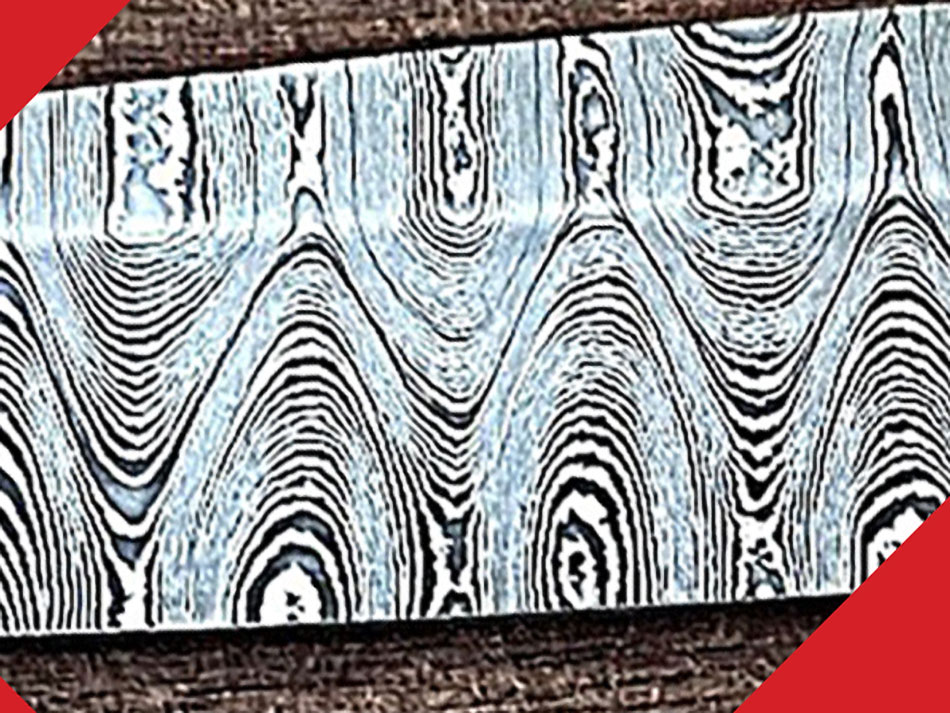
Ladder Damascus is a pattern produced by cutting slots into a layered billet to create a series of repeating “ladder” forms along the blade. The exact appearance depends upon how the billet is forged and manipulated, meaning that each blade has its own character.
What Is Raindrop Damascus?
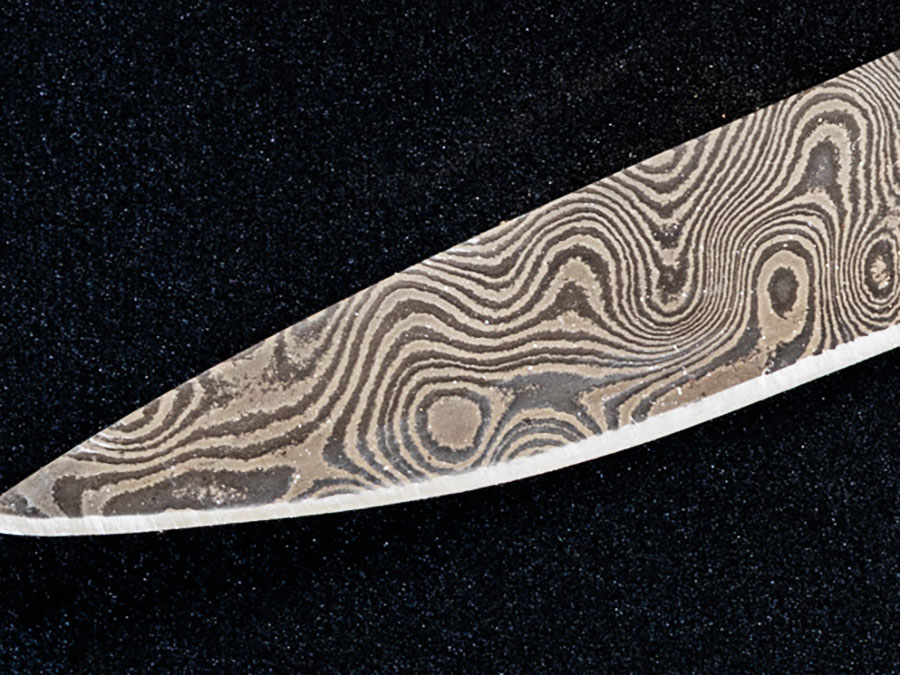
Raindrop Damascus produces a distinctive series of circular or oval patterns within the layered steel. Created by carefully controlled shallow drilling of the surface prior to final forting and rolling into a flat sheet.
What is Twist Damascus
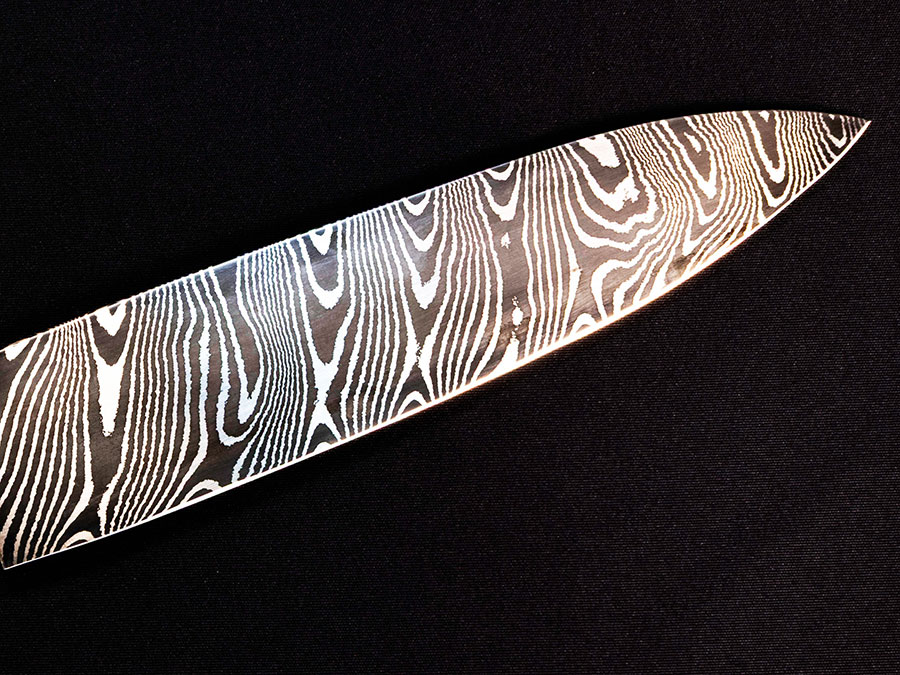
Twist Damascus is created by twisting a layered billet before final forging into sheet form.
This produces a flowing, often highly dynamic pattern which can look particularly striking along the length of a blade.
What are San Mai, Cu Mai and Ni Mai?
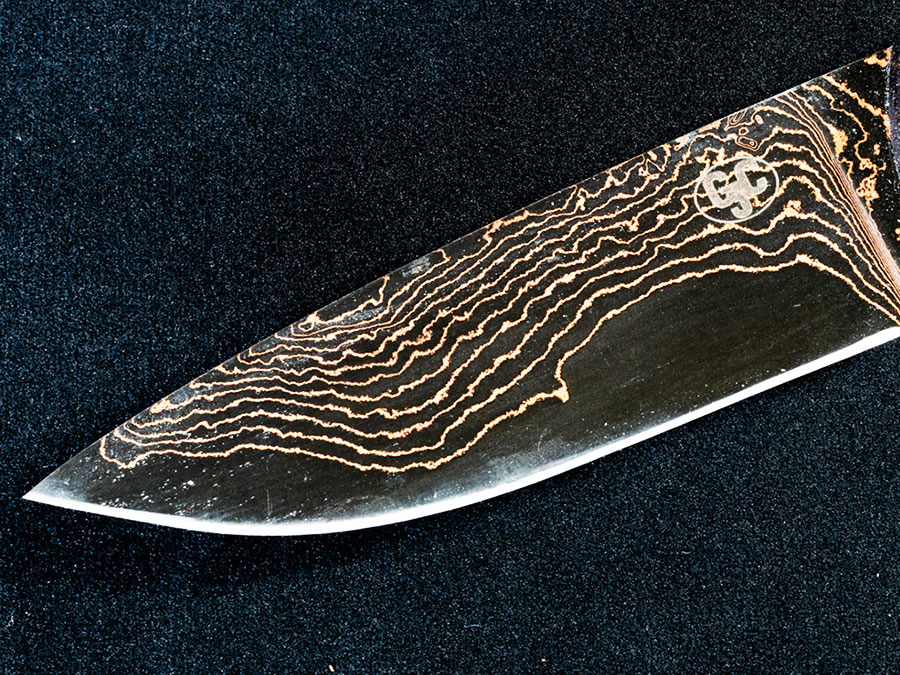
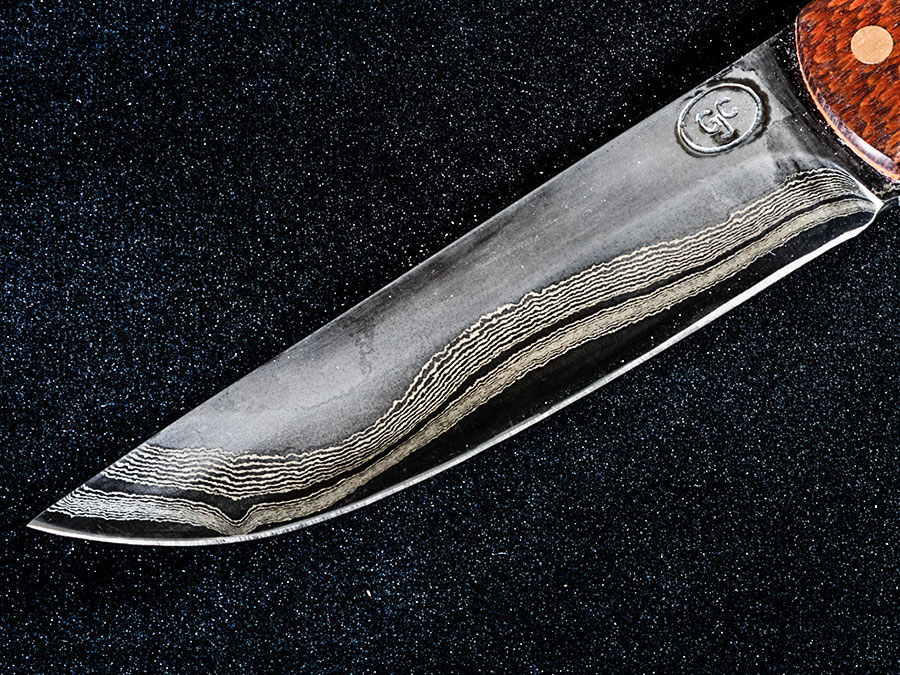
San Mai approximately translates into English as “three layers”, and is a generic term generally accepted as a core with decorative cladding on either side of it.
San Mai, Cu Mai and Ni Mai are constructions in which a steel core is combined with decorative cladding to make the outer layers.
San Mai has a plain core with Damascus or Stainless Steel outer cladding.
Cu Mai (1st image above) incorporates copper into the construction of the cladding, creating a distinctive contrast between the blade materials.
Ni Mai (2nd image) uses pure nickel to create a contrasting outer layer around the core.
These techniques allow considerable scope for creating unusual and individual blade designs.
Can I choose the Damascus pattern?
Yes, where the design and construction allow it.
We can discuss the pattern, overall appearance and how you would like the Damascus to work with the handle and fittings. Because the Damascus is made individually, no two blades will be completely identical.
That individuality is part of the appeal of a genuinely unique knife.
Can you make a kitchen knife specifically for me?
Yes. A bespoke culinary knife can be designed around your cooking style, preferred grip, hand size, handedness, blade length, profile, balance and edge characteristics.
The objective is not simply to produce a beautiful knife. It is to produce one that feels natural in your hand and performs the tasks you actually undertake.
Do you sell ready made knives?
Yes, I have a range of popular designs in Stainless Steel and Damascus. You can visit my online shop or visit my gallery page to view knives I have made in the past so that you can get some ideas for a bespoke knife if you cannot see what you are looking for among my current stock. Contact me so that we can start a conversation to determine your needs.
What is the best steel for a Chef’s Knife?
There is no single best steel.
Different cooks have different priorities. One person may value corrosion resistance and low maintenance, while another may prioritise edge retention or be perfectly happy to give a carbon-steel Damascus knife more care.
I will discuss your requirements with you and recommend a steel and construction appropriate to how you cook.
What is the difference between a Chef’s Knife, Gyuto, Santoku and other profiles?
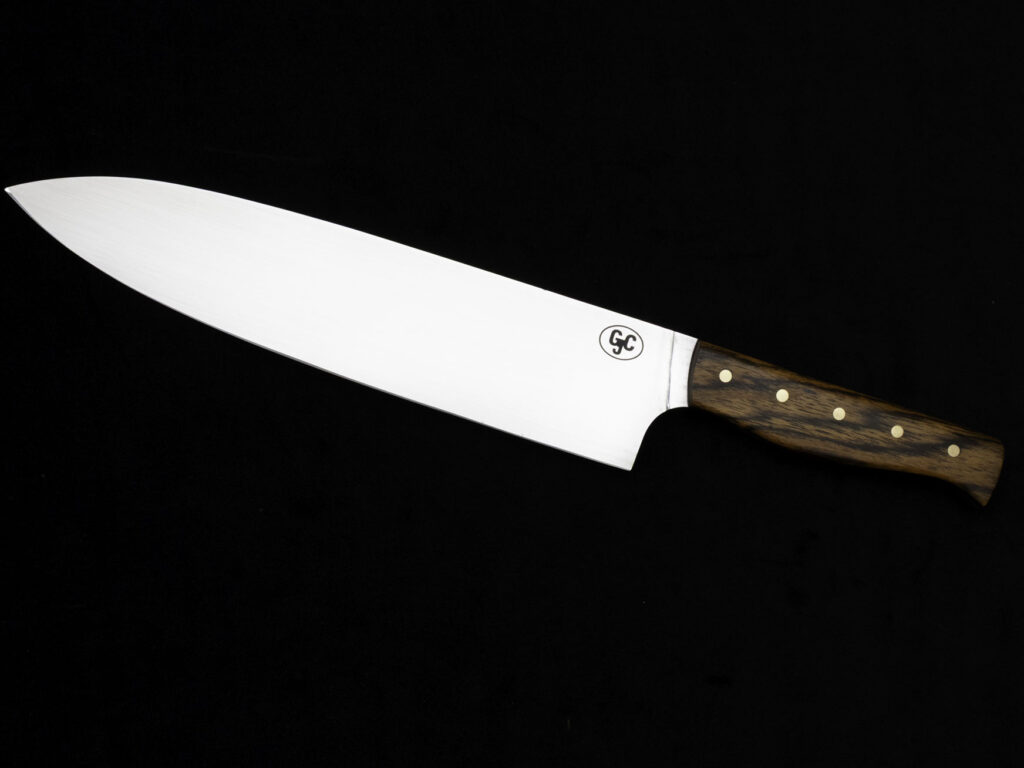
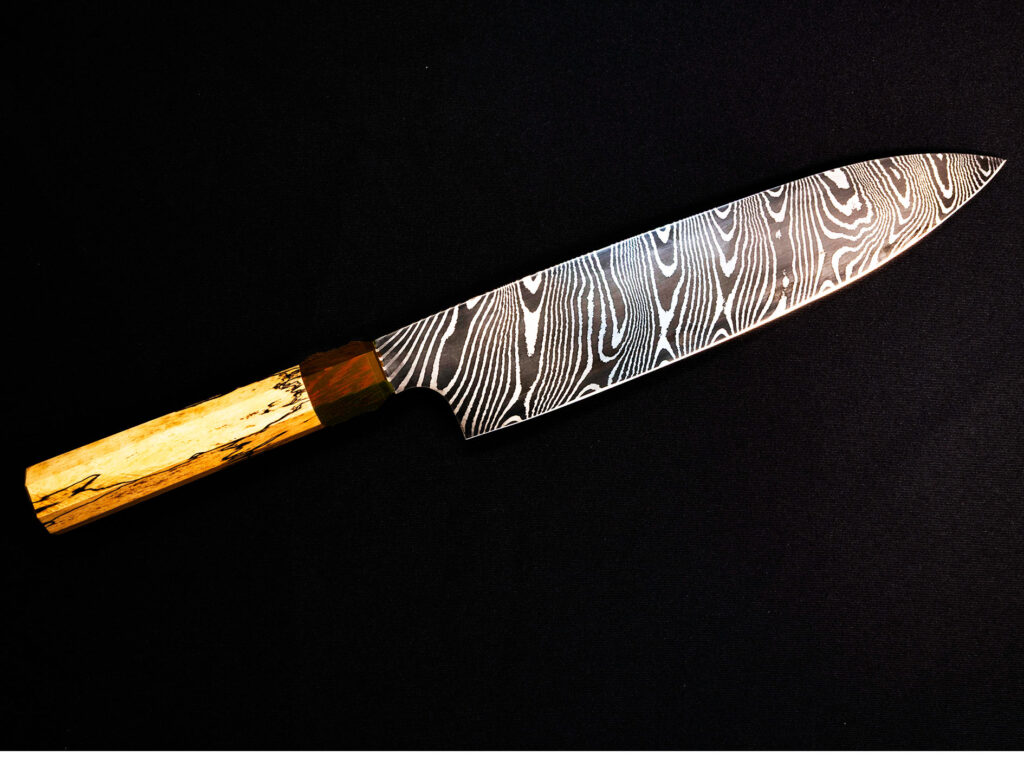
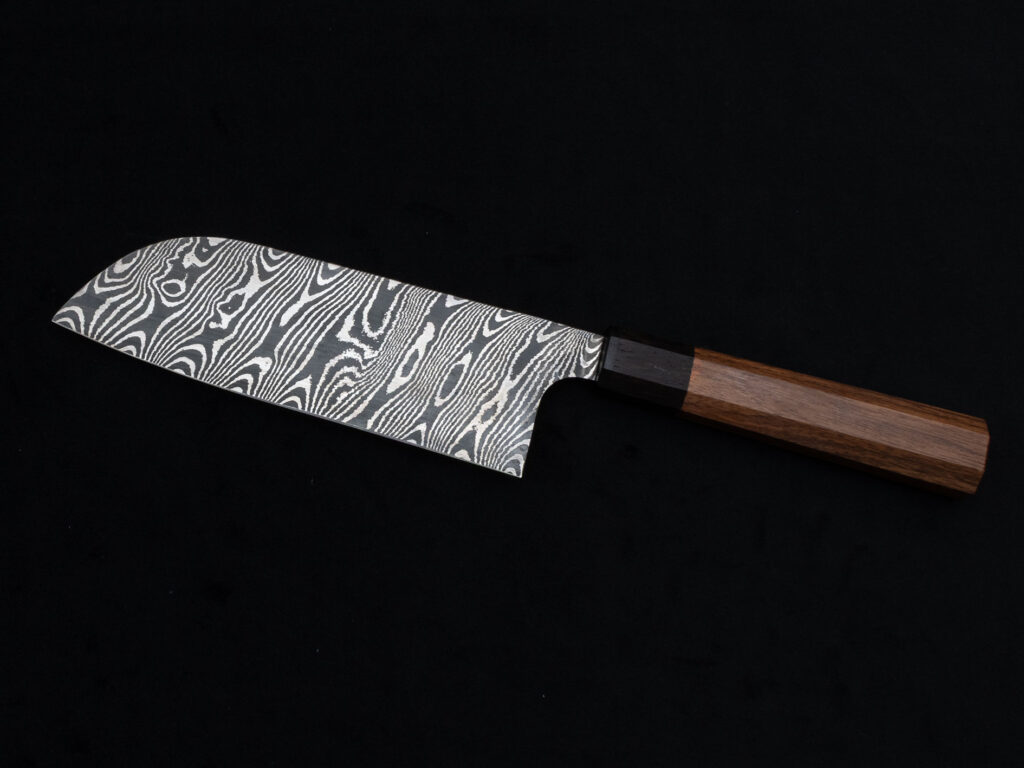
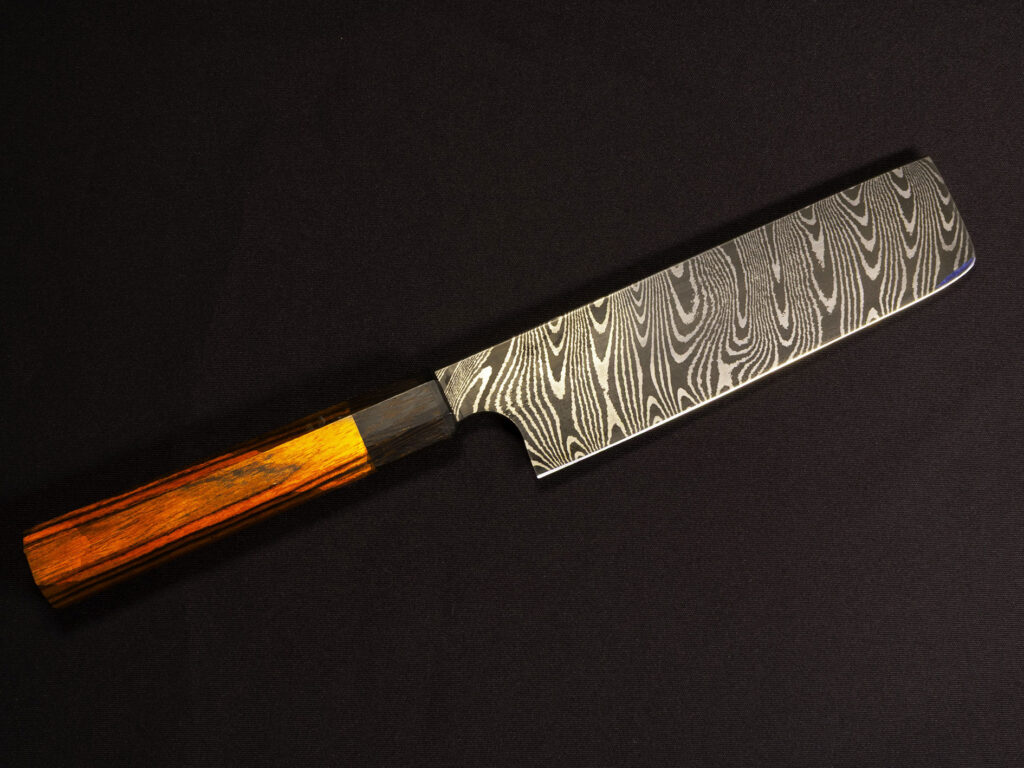
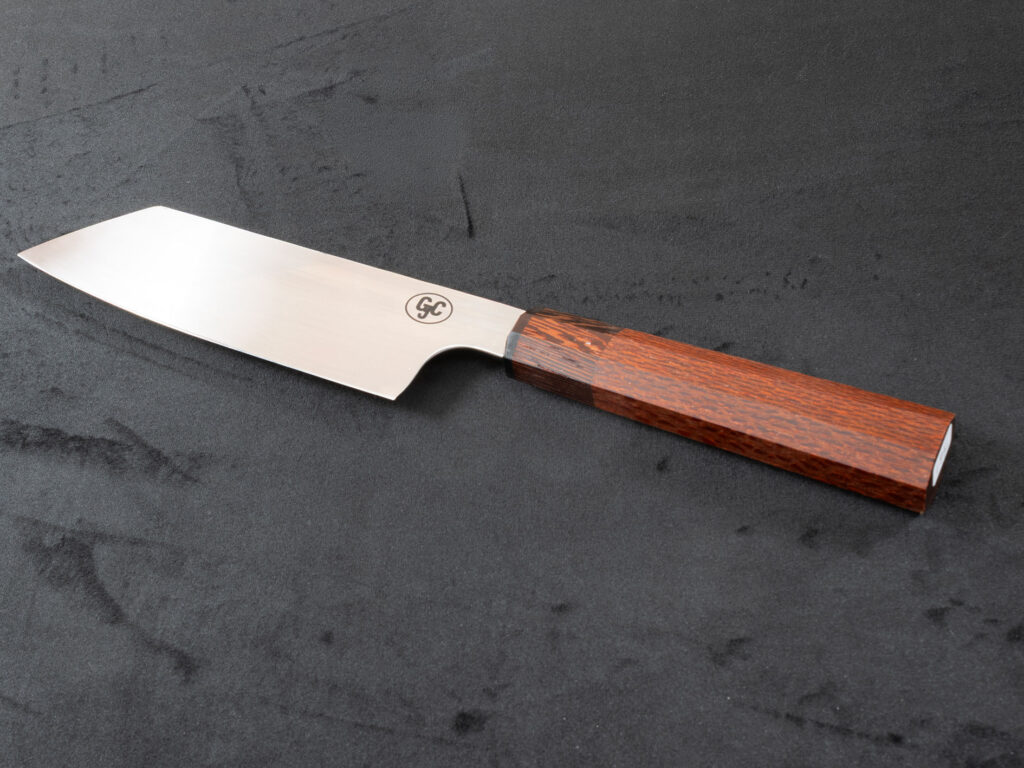
The Japanese cuisine has developes over centuries and they have developed knife shapes for almost every application. A Chef’s knife and Gyuto is most peoples idea of a traditional Chef’s knife. they only differ in handle style. (see images 1 and 2 above.
A Santoku (image 3) is a multi-purpose knife said to be the one most commonly found in a Japanese domestic kitchen. There are knives for preparing vegetables such as the Nakiri (image 4) and Bunka (image 5) and a whole variety if shapes favoured by Sushi chefs.
Can you make left-handed knives?
Yes. Where the design calls for it, handedness can be taken into account when developing the blade geometry and overall design. This is most often seen in high end Sushi knives.
Can I choose the handle material?
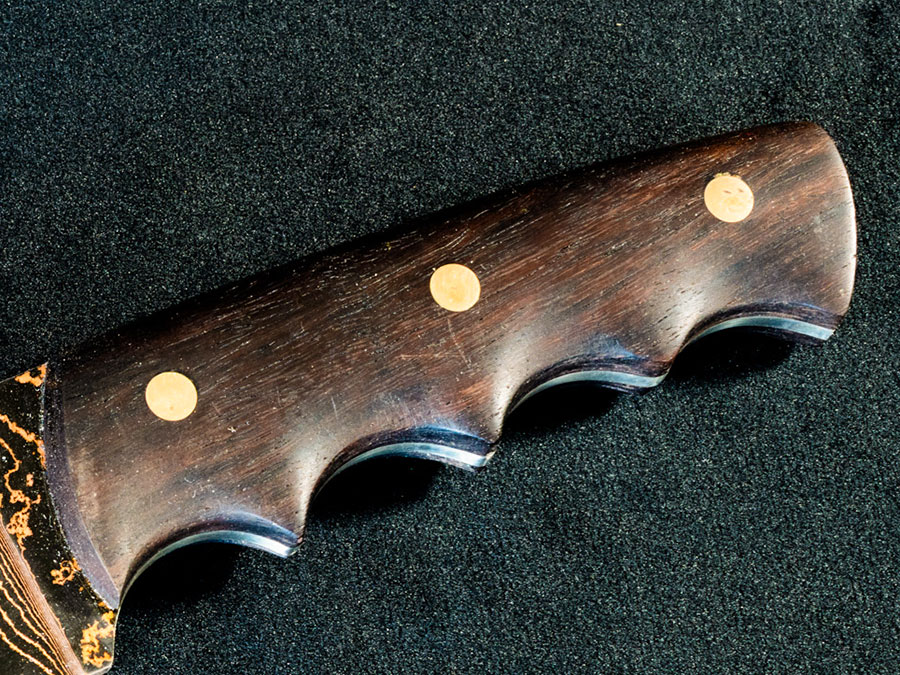
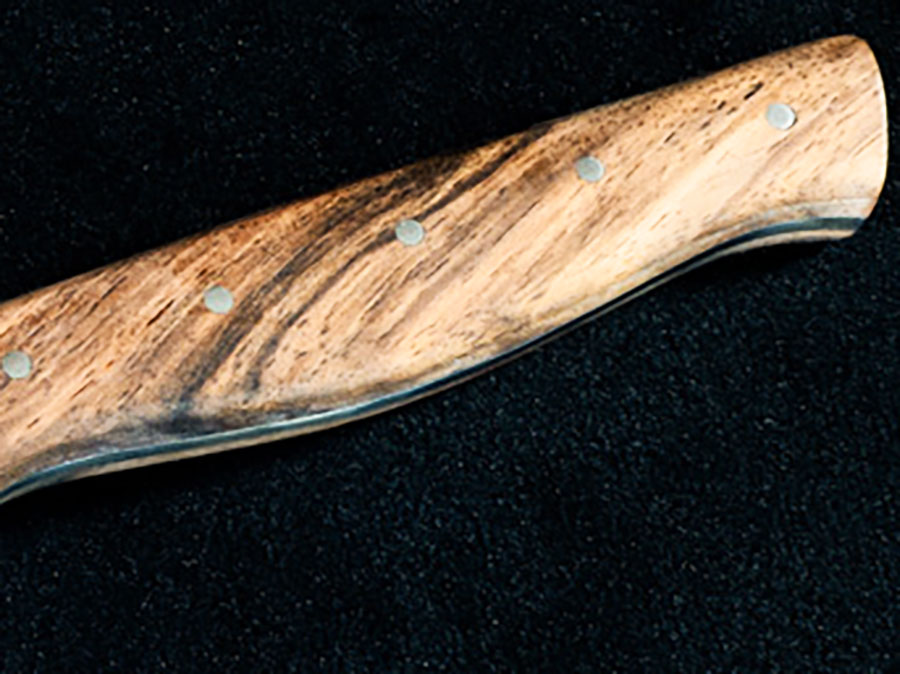
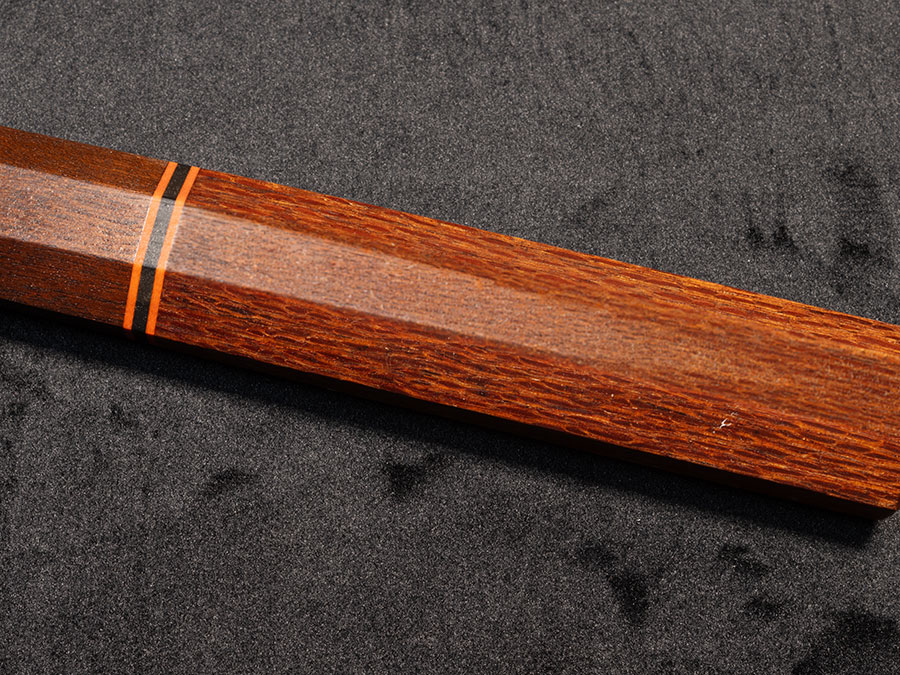
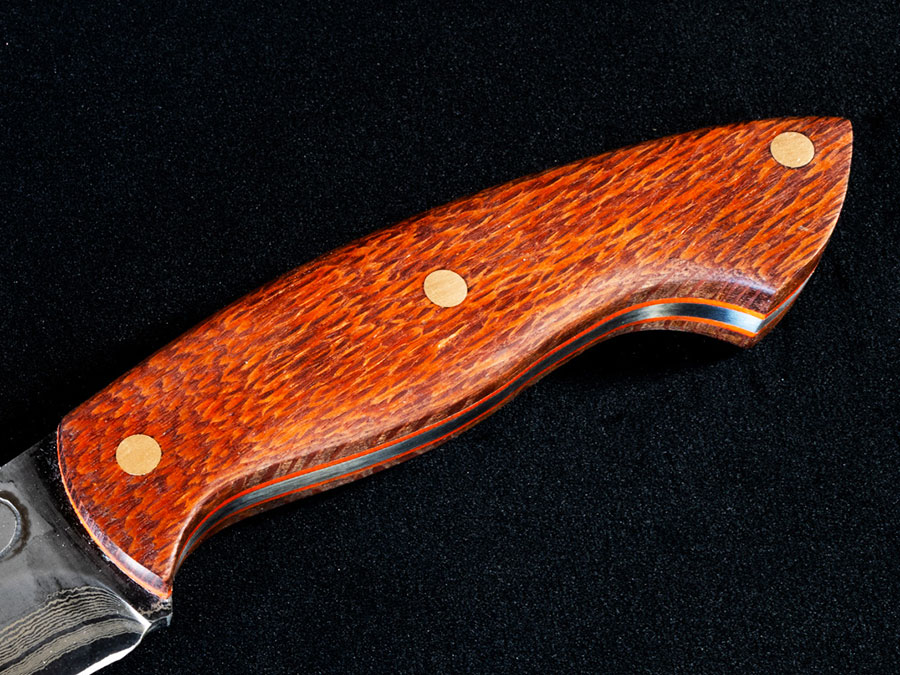
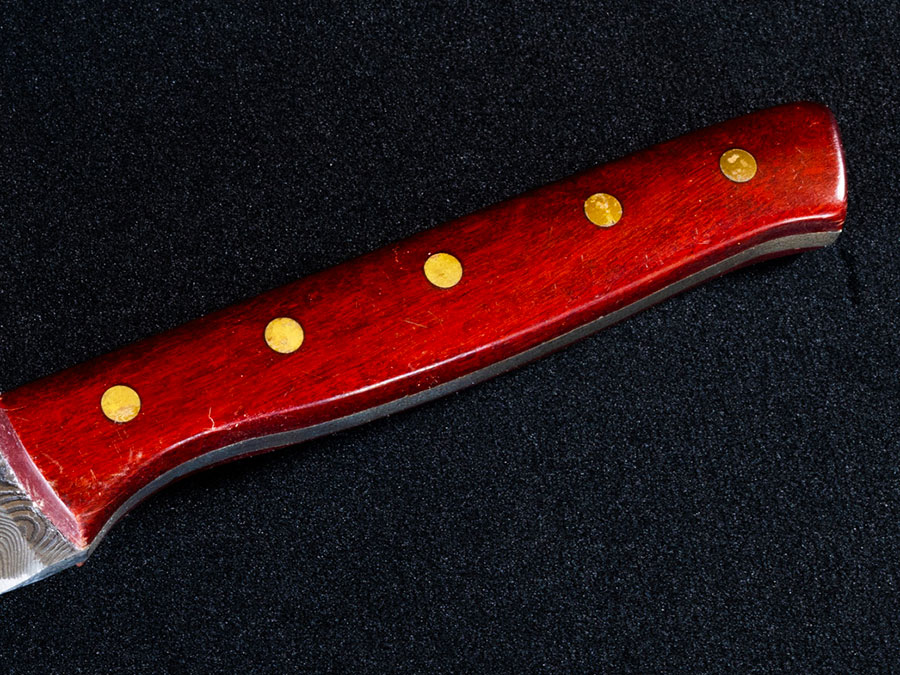
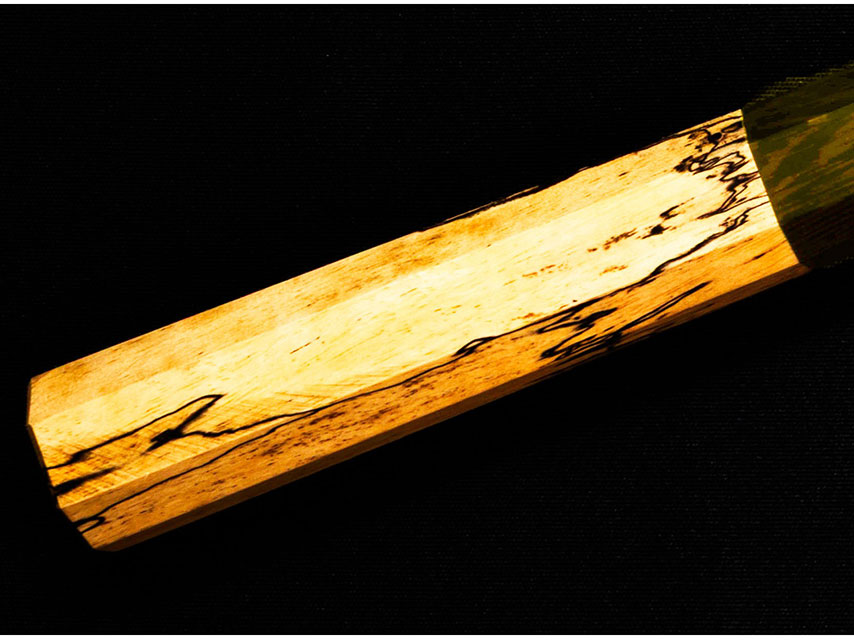
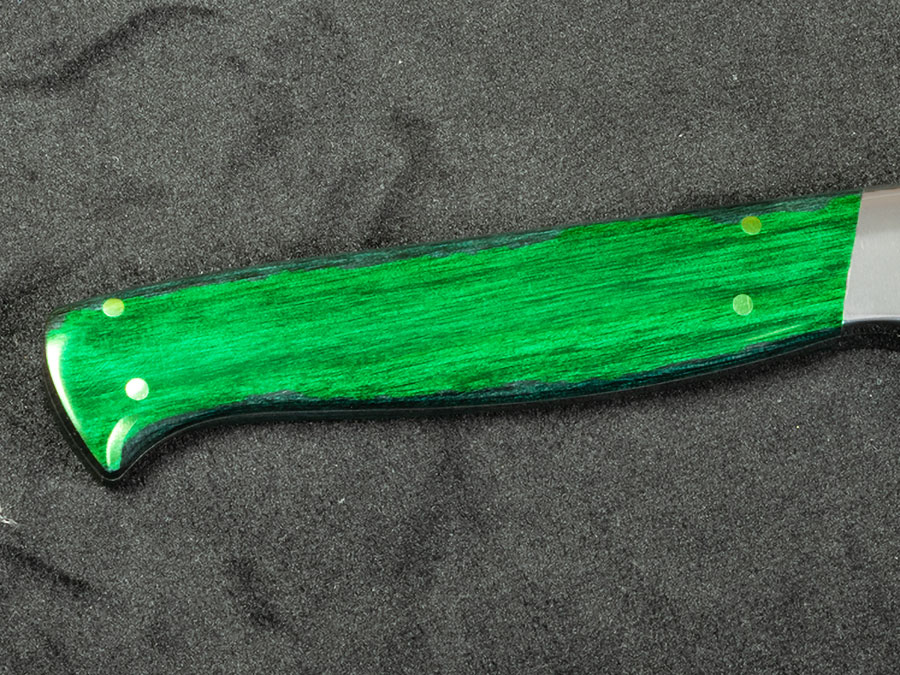
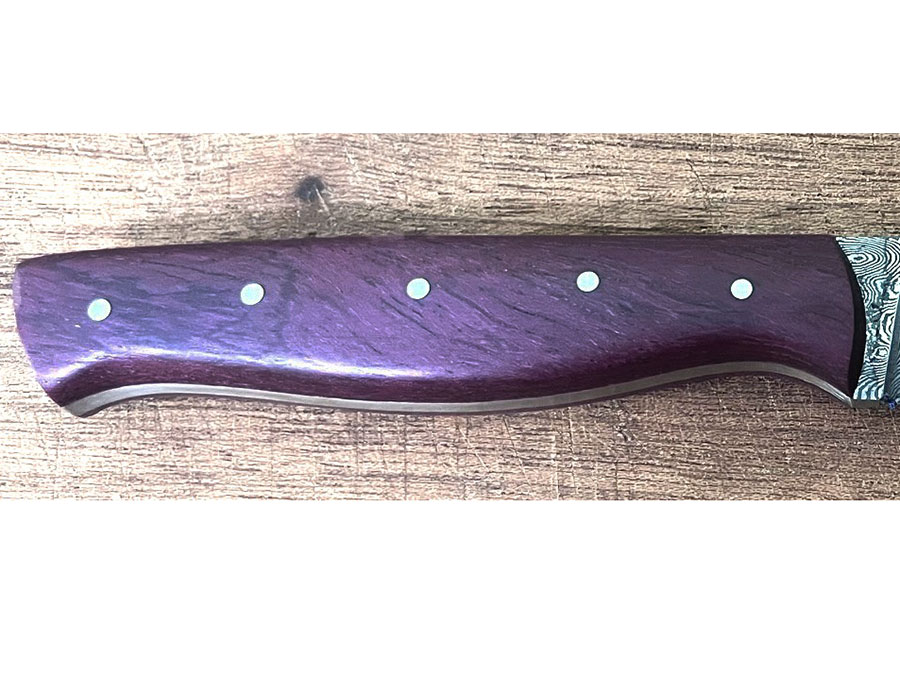
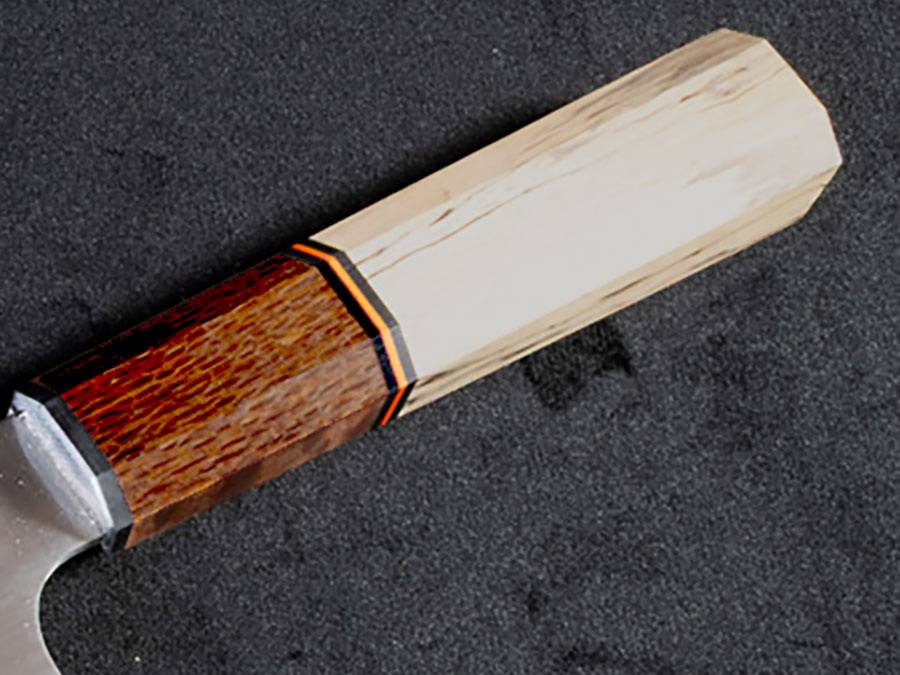
Yes. Handle materials are an important part of a bespoke knife, both aesthetically and ergonomically.
Depending upon the design, I can work with a range of natural and engineered materials. We can discuss appearance, grip, durability, maintenance and how the material complements the blade.
Above are some exmples of natural material. Indian Rosewood, Yew, Walut, Malee Burl, Rhodesian Team and Spalted Tamarind.
Synthetic materials can be used on their own (eg G10) or as liners and/or spacers to enhance the look of a handle. See some examples below.
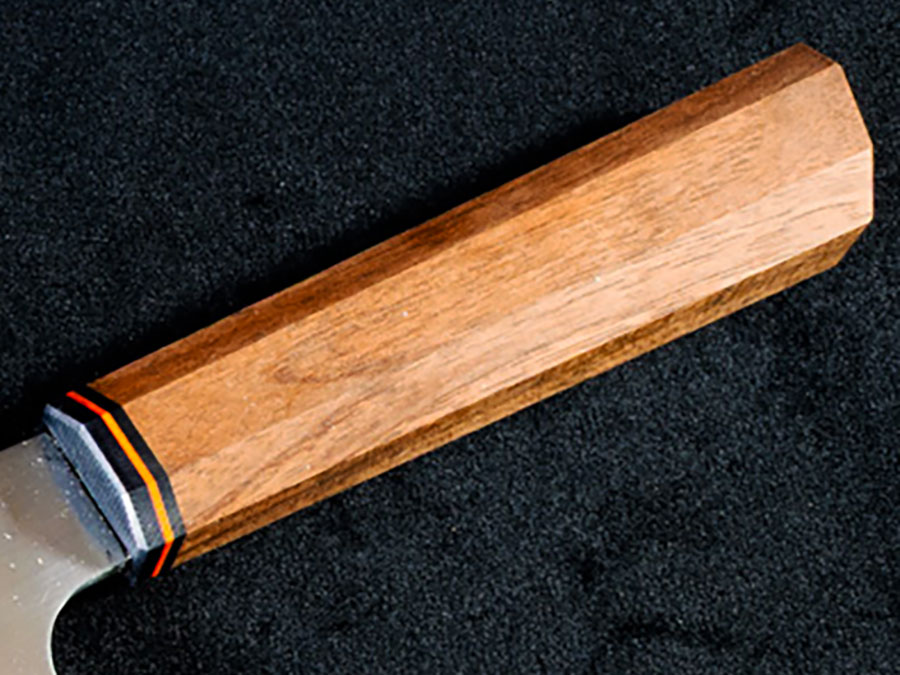
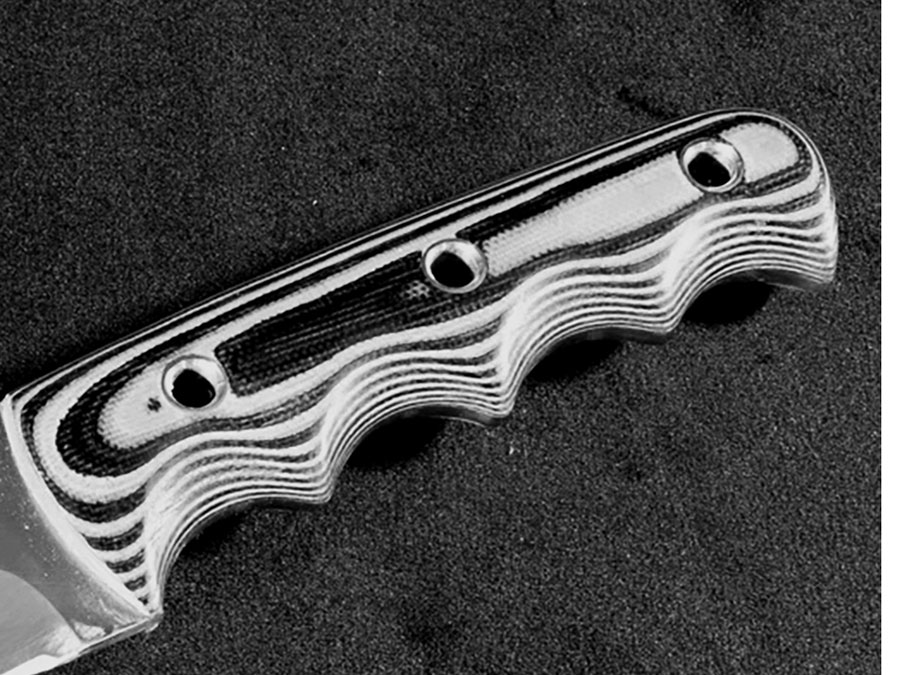
Can You Use African Gemstones To Make A Handle?
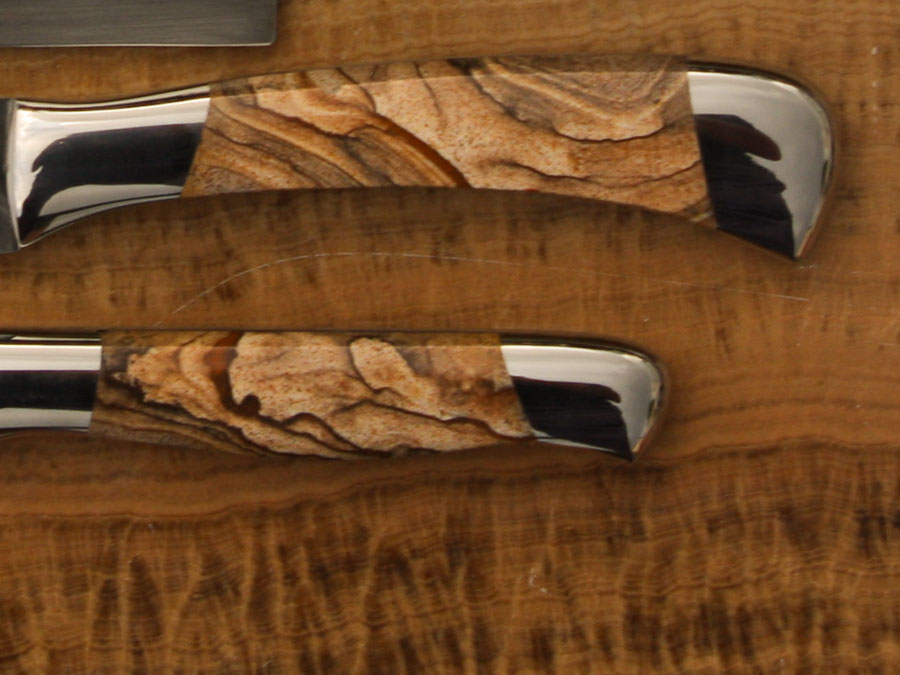
Yes, on selected commissions.
Having lived in South Africa for many years, I have a particular connection with African materials and the country’s knife-making traditions.
Where suitable material is available, African gemstones can be incorporated into a handle to create a genuinely individal knife.
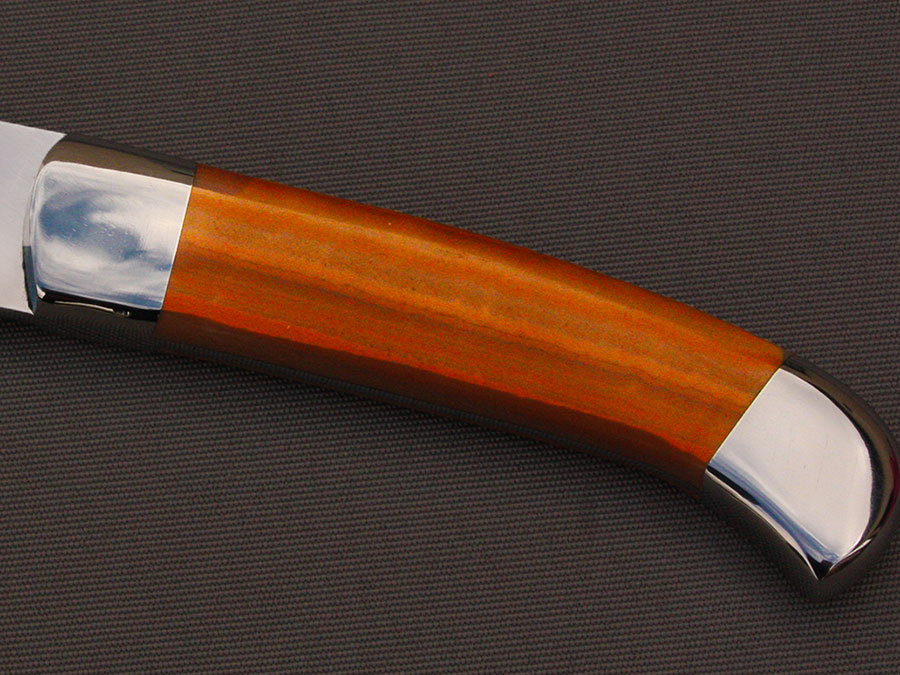
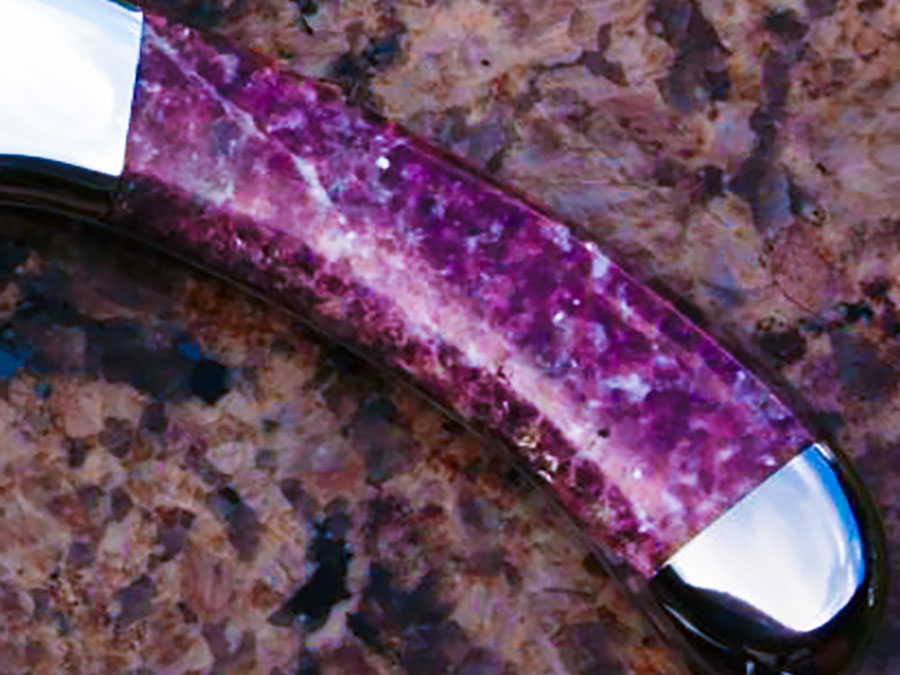
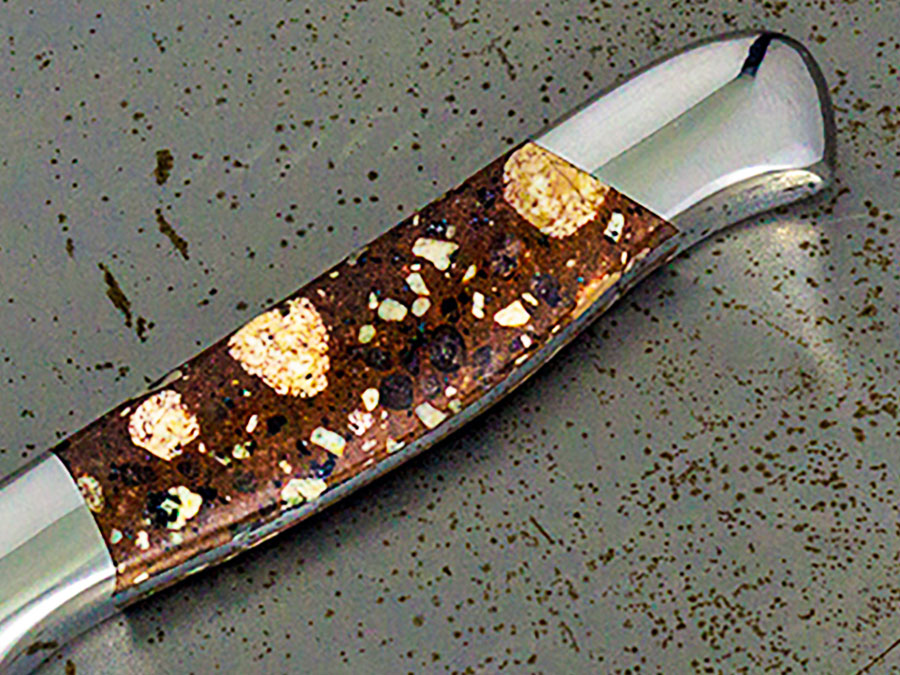
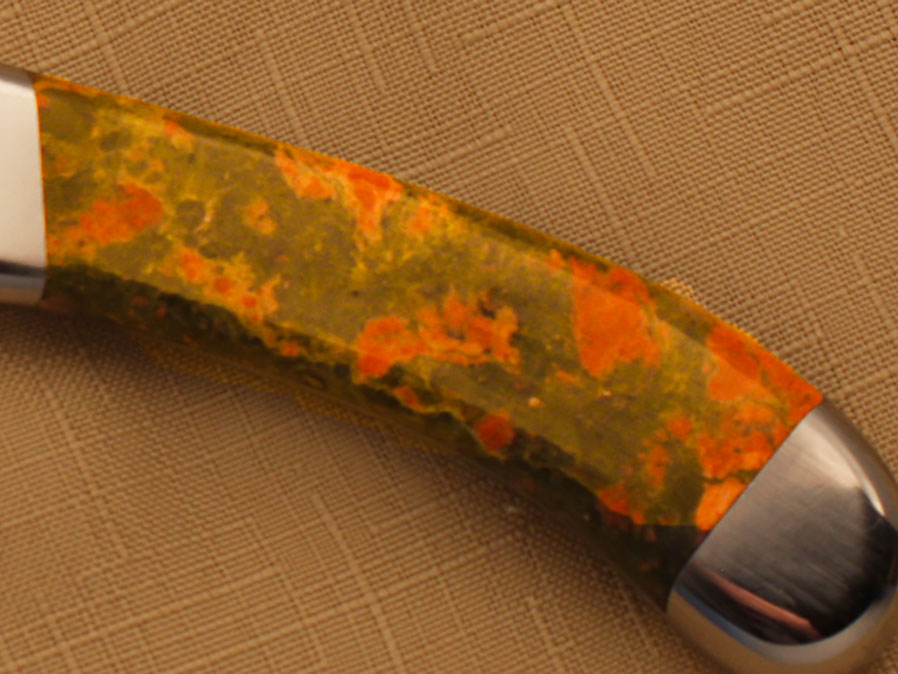
These are particularly interesting for collectors or for someone wanting a knife with a personal connection to Africa.
Can You Make Matching Knives?
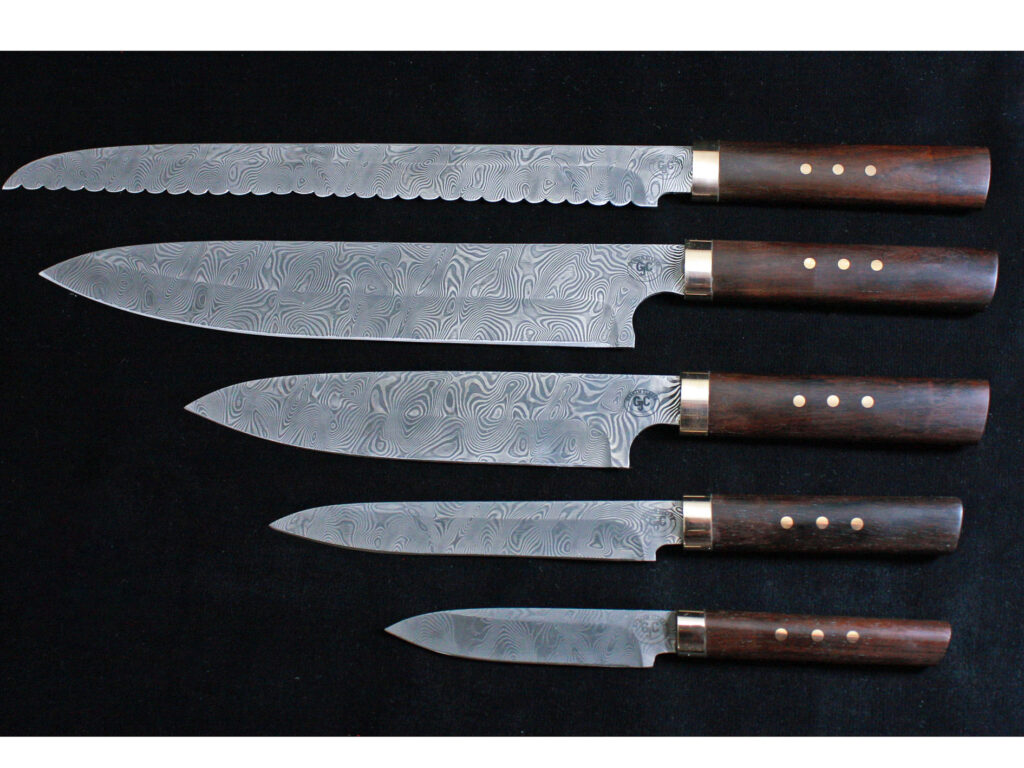
Yes. Matching culinary knives or a co-ordinated set can be commissioned, with the blade materials, handles and overall design developed to complement one another.
Above is a set of stainless steel damascus knives with Indian Rosewood Handles.
What are the best cutting boards?
End grain wood boards and purpose made synthetic rubber base boards
What blade shape is best for bushcraft?
I think drop point and clip point work well. However, there are so many uses for a bushcraft knife it is best if we have a conversation about what you want your knife to do.
Can you make a knife for batoning?
Yes. I would choose a thicker steel heat treated for great toughness. A convex grind will aid edge retention and help wood splitting.
What handle materials are suitable for wet and cold conditions?
Synthetic materials and my favourite is G10 because it doesn’t ever absorb moisture. G10 is now available with fine rubber layers bonded in to further aid grip’
How durable are your handles?
Very durable. All wood handles are fully vacuum stabilised and I use impact resistant epoxy adhesives to hold them in place.
Can you make a knife with a full tang?
Yes. I make more full tang knives than any other type. I also make fully tapered full tang knives on request.
Can You make A Custom Leather Sheath?
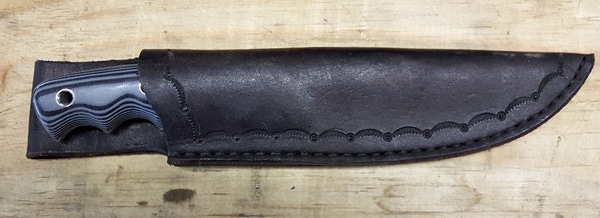
Can you make a custom leather sheath?
Yes. All my hunting knives come with a handcrafted, wet moulded leather sheath. I make all my own sheaths.
What makes a good bushcraft knife?
A good bushcraft knife should be designed around the work it is expected to perform. Toughness, edge stability, geometry, handle security and overall ergonomics are all important.
What is the best steel for a bushcraft/hunting knife?
There is no single specification that makes a knife “the best” bushcraft knife. The right design depends upon how you intend to use it.
Can you make a bespoke hunting knife?
Yes. I can design a hunting knife around the intended use, including blade profile, dimensions, handle, edge characteristics and carry requirements.
The emphasis is on producing a dependable working knife that is comfortable, practical and durable.
Do your bushcraft and hunting knives come with a sheath?
Yes. I hand make a wet-moulded leather sheath for my bushcraft and hunting knives.
The sheath is made specifically for the individual knife rather than being a generic off-the-shelf item.
Why leather?
A properly made leather sheath complements a traditionally hand crafted knife and develops its own character with use.
Wet moulding allows the leather to be formed closely around the individual blade and knife, creating a tailored fit.
How do I commission a Clarke Knife?
The first step is simply to get in touch.
Tell me what you have in mind, what the knife will be used for and anything you already know about the size, style or materials you would like. You do not need to know which steel or geometry is best. That is where my experience can help.
We can discuss the requirements and develop the specification together.
Do I need to know exactly what I want?
Not at all. You may have a very specific design in mind—or simply know that you want a special knife.
I can help you work through the choices and explain the advantages and limitations of different materials, blade profiles and constructions.
Can I provide my own design?
Yes. I am happy to work from drawings, photographs, ideas or even a simple description of what you are looking for. I can then advise on how the design might be adapted to make it practical and effective as a working knife.
Do You Make Sets?
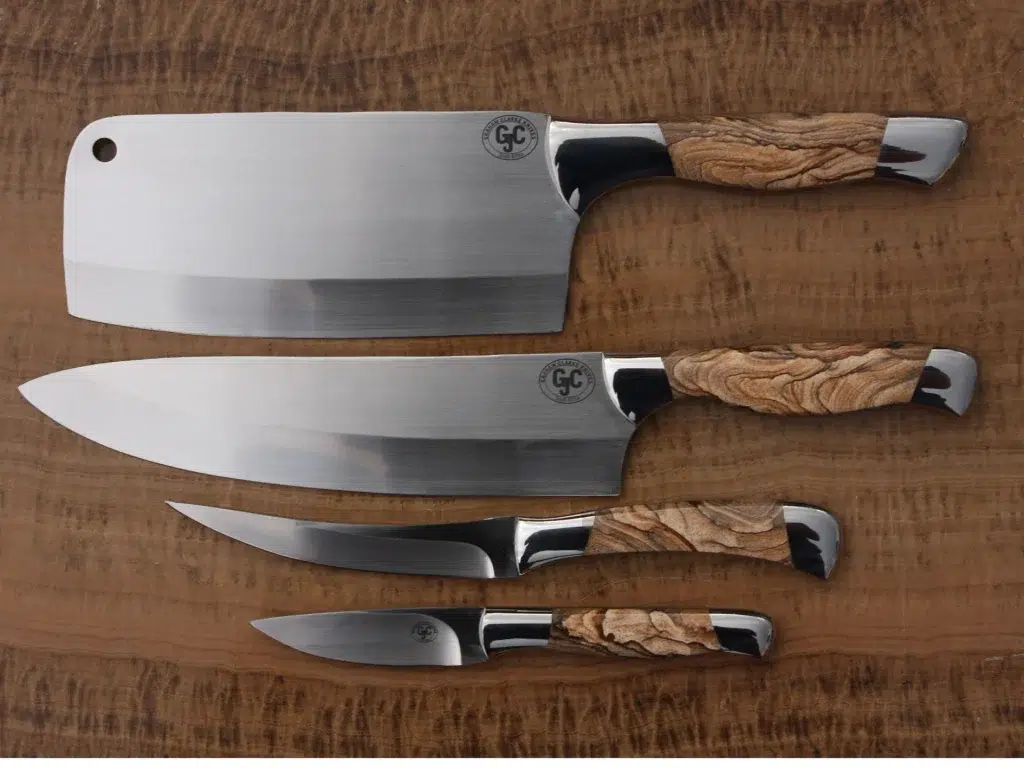
Yes, I will work with you to determine your requirements and budget so that I can create something that works for you. Above is a set I made in Stainless steel with bolsters and Namibian Picture Jasper Gemstone handles.
How much does a bespoke knife cost?
My typical prices are:
Individual stock culinary knives: from approximately £160–£295
Bushcraft and hunting knives: around £275, including a handmade wet-moulded leather sheath
The final price depends upon the specification and materials.
Specialist Damascus, Cu Mai, Ni Mai, African gemstones, unusual fittings, engraving or particularly complex designs may increase the cost.
I will provide a quotation once the requirements of your knife have been discussed.
Why does a bespoke knife cost more than a production knife?
A production knife is made in volume and benefits from economies of scale. A bespoke knife is different. Your knife is individually designed, made and finished rather than produced as one of thousands of identical pieces. You are paying for the materials and the many hours of skilled work involved, but also for the experience behind the decisions about steel, heat treatment, geometry, balance and construction.
In my case, that experience comes from more than 55 years working in engineering and metallurgy, together with my knife-making experience developed in South Africa.
How Long Does it Take to Make a Bespoke Knife?
The time required depends upon the knife and my current workload.
A straightforward culinary knife and a complex Damascus collector’s piece involve very different amounts of work.
I will discuss the expected timescale with you when we agree the commission.
How Should I Look After My Knife?
A good knife deserves good care.
Wash it by hand, dry it thoroughly after use and store it safely.
The precise care requirements depend upon the steel and handle materials used, and I will provide appropriate advice with your knife.
Can I put my knife in the dishwasher?
No. Hand washing is strongly recommended for all bespoke knives.
Dishwashers expose knives to high temperatures, moisture and aggressive chemicals that can damage blades, handles and fittings.
Will my Carbon-Steel Knife Rust?
Carbon steel is more susceptible to corrosion than stainless steel, so it requires more care. This is simply a characteristic of the material rather than a defect. With proper maintenance (and never store any knife in a leather sheath for more than a few days at a time), a carbon-steel blade can develop an attractive patina over time while continuing to provide excellent cutting performance.
How Should I Sharpen My Knife?
The correct method depends upon the steel and geometry of your individual knife. I am happy to advise you on an appropriate sharpening system and technique. he important thing is to maintain the edge correctly rather than allowing it to become excessively blunt before sharpening.
How Often Should I Have my Knife Professionally Sharpened?
This totally depends on usage. Usually the right time for refurbishment is whem you are no longer able to bring it’s performance level back to “as new”.
Can You Sharpen or Refurbish my Clarke Knife?
I offer a free sharpening service. You only need to pay for the postage. Please contact me to discuss your requirements for re-furbishing. Depending upon the condition and work required, I may be able to regrind, refurbish or otherwise restore one of my knives.
Can I Commission a Knife Purely as a Collector’s Piece?
Absolutely. A collector’s knife provides considerably more scope for unusual materials, Damascus patterns, detailed finishing and individual design.
African gemstones, bespoke Damascus and other specialist materials can be incorporated where appropriate.
Can You Make a Completely Unique Knife?
Yes. In fact, that is one of the great attractions of commissioning a bespoke knife.
Rather than choosing something that already exists, we can create a knife around your ideas, your interests and your intended purpose.
Can You Make a Knife as a Special Gift?
Yes. A bespoke knife can make a particularly personal gift for a chef, cook, outdoorsman, hunter or collector.
A commemorative date, initials, engraving, special material or personal connection can be incorporated into the design where appropriate.
Can I have a Name, Initials or Inscription Incorporated Into the Knife?
Yes. This can be discussed when deciding what your requirements are.
Can a Working Knife also be a Collector’s Piece?
Certainly. I don’t see any contradiction between a knife being beautiful enough to display and good enough to use. For many owners, that combination is precisely what makes a handmade knife special.
Can I Have Documentation Describing the Damascus?
Absoloutely. I describe the knife on my B given to the buyer of every one of my knives.
Is Every Knife Individually Numbered?
Yes and is noted on my Record of Authenticity.
Do You Sign or Mark Your Blades?
Yes. My blades are marked with my logo along with its serial number.
Do you Provide a Certificate of Authenticity?
Yes. I call it a Record of Authenticity. It gives a description of the knife, the serial number, date of manufacture, details of the steel, blade profile and hardness.
Still have Questions?
I have answered the FAQ about knifemaking that I am generally asked. If I have missed your question Get in touch. for a chat or book an appointment to visit my workshop.